
Tourniquet-less knee replacement Learn more about our Rocky Mount knee replacement team.
Key Takeaways
- Tourniquet-less knee replacement can lower early pain and reduce opioid needs.
- It supports quicker starts to physical therapy and daily movement.
- Combined with other modern pain strategies, it promotes a smoother recovery.
- Patients often feel more in control and experience fewer medication-related side effects.
Why Opioid Reduction Matters After Knee Replacement
Knee replacement surgery can ease years of pain and help you move more freely again. Yet many people feel anxious about the recovery period, especially with the strong pain medications that are often prescribed. Opioids can cause side effects such as nausea, constipation, drowsiness, and in some cases longer-term challenges. These side effects can hinder and even extend the recovery period.
For patients eager to get back to normal after knee replacement, the good news is that better options exist today. One approach that helps many patients is performing knee replacement without a tourniquet, often called tourniquet-less knee replacement. This technique supports effective pain control while cutting down on opioid use, so you can focus on healing and returning to the activities you enjoy.
Tourniquet-Less Knee Replacement: A Gentler Approach
When you research knee replacement, you probably want clear details on what the surgery and recovery will involve. In traditional procedures, surgeons sometimes use a tourniquet which is a band that temporarily stops blood flow to the leg to create a drier surgical field. Choosing not to use one creates a different experience for your body.
Without the tourniquet, blood continues to flow naturally during the operation. This avoids the sudden pressure and swelling that can occur when the band is released, which often adds to early post-surgery discomfort.
At Carolina Regional Orthopaedics, Dr. Bernard Kemker, Director of Joint Replacement Services, offers tourniquet-less knee replacement techniques for both total and partial procedures as part of a modern, patient-centered approach.
How This Technique Works in Your Recovery
Your care team selects tools and methods designed around patient comfort. In a tourniquet-less procedure, surgeons control bleeding carefully while your leg’s circulation stays active. They often combine this with numbing medications around the joint (local or regional blocks), ice therapy, elevation, and non-opioid medicines such as acetaminophen or anti-inflammatories.
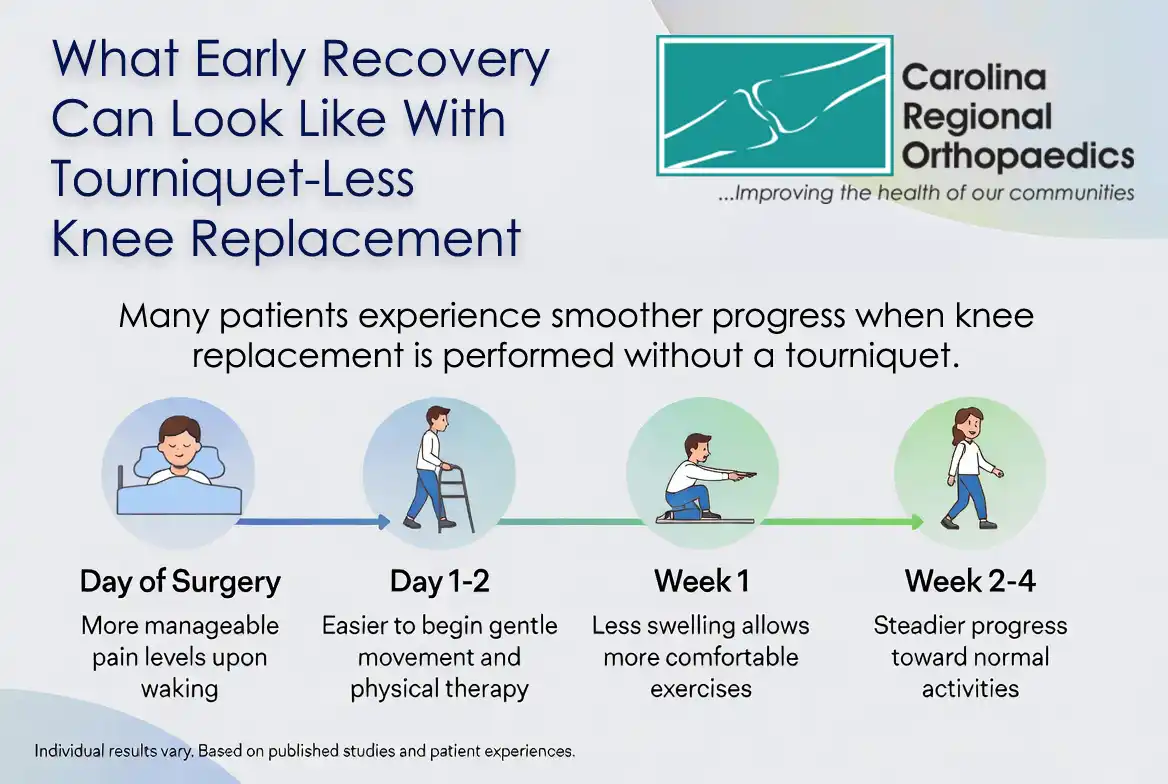
Many people wake up with more manageable pain levels. This makes it easier to start gentle movement and physical therapy earlier, often reducing reliance on stronger medications. The focus stays on staying ahead of discomfort through a combination of approaches rather than depending heavily on opioids.
Recovery Comparison: With vs. Without a Tourniquet
Understanding the differences can help you picture what recovery might feel like. Here is a side-by-side look based on patient experiences and published studies.
*****
Benefits You Can Expect
Research supports what many patients notice. One study (Kheir et al., 2018) found that women who had tourniquet-less knee replacement reported less pain and used significantly fewer opioids in the first 24 hours after surgery compared to those who had the procedure with a tourniquet.
You may also experience less swelling and bruising because blood flow was never fully stopped. This can make early walking and exercises feel more achievable. Overall, lower opioid use means fewer side effects, so you can rest better, keep your appetite, and stay more alert during those important first days and weeks.
These improvements matter especially for people who want to return to everyday tasks like walking the dog, spending time with family, or handling household chores without extra hurdles.
What Your Recovery Can Look Like
Imagine starting to stand and take supported steps on the first day with a clearer head. At home, your routine might include elevating your leg, using ice as directed, following a schedule of milder pain relievers, and doing your prescribed exercises.
Improvement usually builds steadily over the first couple of weeks. Physical therapy sessions become more productive when pain does not slow you down as much. Helpful steps include:
- Taking medications on schedule to prevent pain from building up
- Moving gradually with the support of a walker or cane as recommended
- Checking in with your care team promptly if questions or concerns arise
Our physical therapy team at Carolina Regional Orthopaedics works closely with Dr. Kemker to tailor rehabilitation plans that take full advantage of the smoother early recovery many patients experience with tourniquet-less techniques.
Conclusion
Knee replacement offers a path to better mobility and less daily pain. Techniques like performing the procedure without a tourniquet make the recovery process more manageable for many people by easing discomfort and limiting opioid reliance. Every patient’s situation is unique, so the best plan is one tailored to your needs and goals.
Talk with your doctor about pain management choices that could fit your circumstances. If you are exploring knee replacement options, reaching out for a consultation can help you understand what approach might work best for you and move closer to lasting relief.
Ready to learn more about tourniquet-less knee replacement and personalized pain management?
Call Carolina Regional Orthopaedics at (252) 443-0400 or request an appointment online. Dr. Kemker and our joint replacement team are here to help you every step of the way.
References
- Kheir MM, et al. Tourniquetless Total Knee Arthroplasty With Modern Perioperative Protocols Decreases Pain and Opioid Consumption in Women. J Arthroplasty. 2018.
- Ejaz A, et al. Faster recovery without the use of a tourniquet in total knee arthroplasty. Acta Orthop. 2014.
- Additional peer-reviewed studies on tourniquet use, multimodal pain management, and early recovery after total knee arthroplasty.
- American Association of Hip and Knee Surgeons (AAHKS) resources on joint replacement recovery.
Disclaimer: This article is for informational purposes only and is not a substitute for professional medical advice. Always consult your physician for diagnosis and treatment recommendations. Individual results vary.